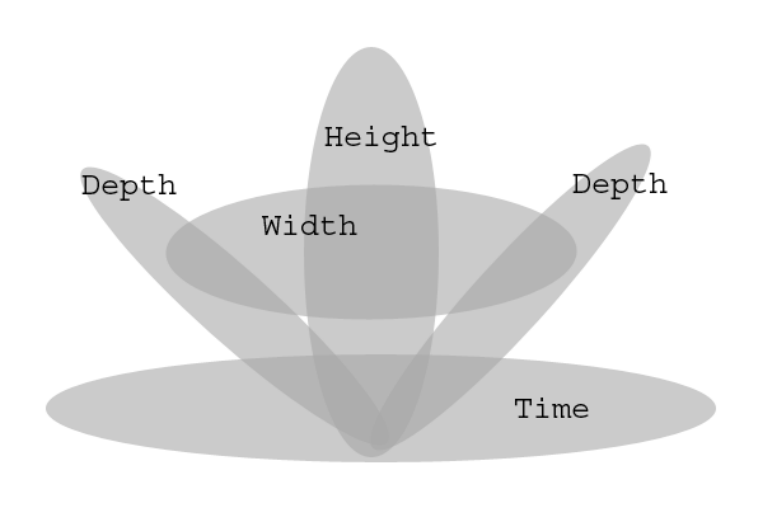
3.3 A Guide to Some Mixing Tools and FX
The table below serves as a guide to how some of the many tools and techniques used in mixing contribute to creating your overall sound canvas.
Kind: concept (reamix-section) Chapter: 3 Spatial Mixing Source: ReaMix (October 2009)
The table below serves as a guide to how some of the many tools and techniques used in mixing contribute to creating your overall sound canvas. When it comes to artistic mixing, the trick is to be able use the right tools for the right job together and in combination, not to regard each on its own or in isolation. The chart below shows the primary functions of some of the tools at your disposal.
Tool Width Depth Height Time
Panning
Volume
Channel Splitting
Routing
EQ
Compression
Delay
Chorus
Reverb
Other FX (variously)
Let’s take a simple example of how you can interpret this chart. Notice that you can create a feeling of width in your mix by the way in which you pan your various instruments. But if as well as width you wish to add more depth to a particular instrument you may also need to use some EQ on that instrument to bring it more forward or further back in your mix. And if you also wish to control the way the instrument responds to time, you might also wish to consider adding a touch of delay.
This leads us to an important observation. There is no such thing as a standard or universal setting. If you are a regular visitor to any audio forum, you will often come across questions like “How should I EQ my guitar (or vocal)” popping up with an astonishing regularity. The simple answer to these questions is that there is no simple answer. Even if we are talking about the same guitar, or the same voice, the number of factors which go into determining the optimum settings is such that the question almost has no meaning.
These factors include:
-
The style of music. The same vocalist crooning on a ballad will require different treatment from that which would be needed if they were belting out a rock and roll number.
-
The arrangement. For example, if your musical arrangement consists of acoustic guitar, violin and mandolin then you would expect to put more bottom end on the guitar than if the arrangement was, say, guitar, double bass and cello.
-
The mood. What sort of message or feeling is the song intended to convey? A song intended to create a feeling of joy and happiness will require different treatment from a sad or mellow song.
-
The context. An instrument might be playing quietly in the background for much of the song, but perhaps have twenty seconds or so of fame somewhere in the middle. It will likely require different EQ, volume, panning and compression settings at different times throughout the song.
All of this leads us to one inescapable conclusion. You will never learn how to use FX properly as long as you depend on presets. I really can’t stress this too much. Let’s try an analogy. Let us suppose that you have
decided to open a restaurant. Maybe you’ve also decided to make soup – really good soup – your speciality. In that case, which approach would be more likely to yield the best results? Would you:
-
Tramp the aisles of every supermarket in town looking for the best instant dehydrated packet soups that you could find, or
-
Learn to make the best fresh soup that you can using the finest fresh ingredients that you could find?
I rest my case!
There’s one more thing that stands out from this chart. That is the importance of Channel Splitting and Routing when mixing in REAPER. It’s no exaggeration to say that this functionality (when used in conjunction with the many other tools at your disposal) provide opportunities for quality mixing that just would never occur to you with most other DAWs.
One more point. The chart shows those aspects of mixing for which the various mixing tools are shown. This information should be taken as a starting point, not a limitation. As you will later see, the different spatial dimensions of sound do interact with each other.
For example, it is perfectly feasible to envisage circumstances when panning can help to create a feeling of more or less depth, or where the application of a touch of compression can affect the perceived width of an instrument. Mixing, thank goodness, isn’t just about science and theory, it’s every bit as much about imagination, experimentation and creativity.